
The Year You Cannot Inspect—Faith, Trust, and the Case for Knowing
A custom home is usually described as a thing you buy. In practice, it may be closer to a stretch of time you agree to. A year, give or take. Not an object that arrives, but a season of your life you choose to invest in a particular way.
Consider what is inside that stretch. A northern Colorado winter, someone’s birthday, a school year that begins and ends whether the drywall is finished or not. Holidays that will happen in your kitchen or in someone else’s. A couple hundred ordinary weekday mornings that will feel one way if the project is where it should be and another way if it is not.
Much of what goes into a contract to build can be examined before you commit. You can hold the cabinet sample. You can look at the stone slab in daylight and again at dusk. You can lay the plan on a table and walk it with your finger. A line item you can’t inspect is one of those ordinary weekday mornings next February.
There are two ways to consider a year you cannot see into. One is to trust that it will be fine. The other is to make as much of it as is visible before any work begins.
Two words worth a closer look
Two words come up whenever we talk about trusting a builder. Faith, in the old definition, is the assurance of things hoped for, the conviction of things not seen. Trust is a belief in the reliability, the truth, the ability, or the strength of someone. Notice what those share. Both point at the same place: the unknown. They are the instruments we use to cross a gap in information. No one needs faith in what they can already see.
So the useful question is not whether trust belongs in a working relationship. It does, always, and a year without it would be a long one for everybody. The better question: how wide a gap are you being asked to cross with it?
What a little faith carries well
A little faith carries a great deal. It carries the first phone call, the walk-through of the property, and the sense that the person across the table is someone you could spend a year working with. Those are real things, and no amount of documentation replaces them. Every good project we have ever been part of began with some version of that feeling.
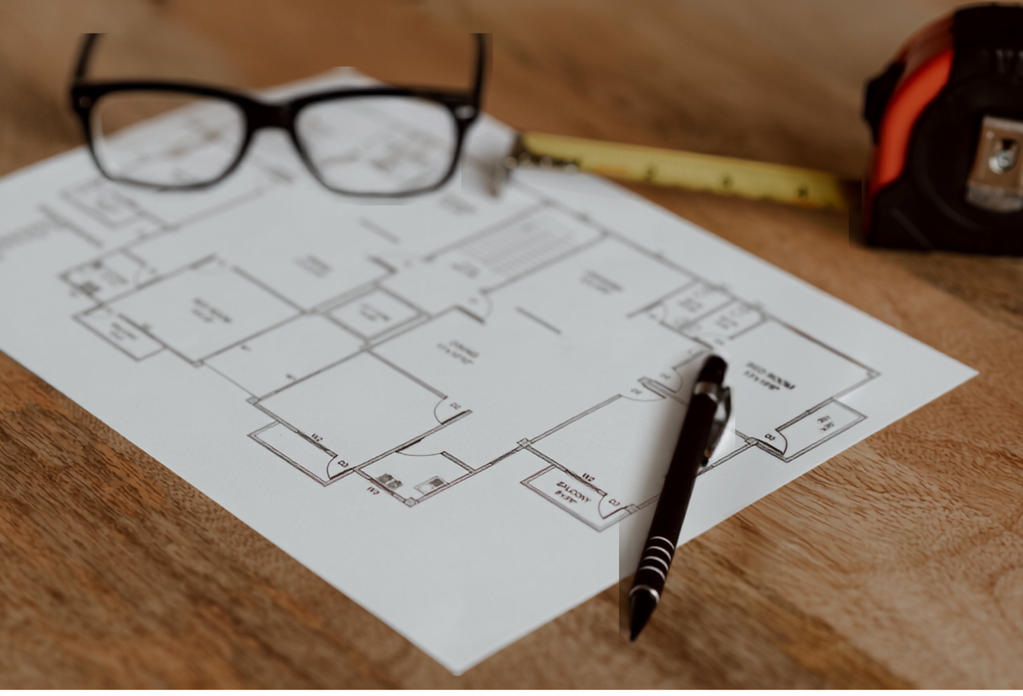
A little faith brings two parties to the table; strong documentation keeps them there as the year inevitably shifts—and years always do.
A crate of tile arrives with breakage. A window package delivery date slips by nine days. A homeowner stands in the framed opening of the primary bath, sees the natural light differently than they did on paper, and wants to reconsider the stone color. A job changes. A parent gets sick. None of those are failures. They are what a year is made of.
Faith or trust isn’t what will make handling the normal day-to-day possible so much as a confidence in an existing agreement. When both parties share a common understanding, a schedule, a specified cost, and an agreed process for changes, the tile conversation stays a conversation about tile. The conversation often takes a few minutes, and everyone goes back to work. When the only shared agreement is a price, that same conversation must reach for something else, and what it usually reaches for is character. Two reasonable people end up discussing each other instead of the tile.
None of that makes the unexpected go away. A schedule does not keep a window package from slipping. What an agreement does is settle, in advance and in daylight, who absorbs it and how. That is a smaller promise than a year without surprises, and it is one we can actually keep.
This is not an argument against faith or trust. It is an argument for giving them a little backup. A little faith, with paper behind it, holds up when life requires adjustments.
Making the year knowable
The second approach is the one we have organized the company around: make as much of the year visible as possible before any work begins.
Rather than asking you to believe the year will go well, we put it on paper. Then we hand it to you and ask whether it suits you.
In practice, that comes down to three documents. Two of them you read before you commit. The third begins when the work does.
The first is a cost analysis that is researched, documented, and specified—prepared at a conceptual level, then at schematic, then at contract, each successively more defined than the last. We call ours an Investment Analysis, though the name matters less than its shape. What matters is that it is not simply a lump sum number. It is a set of decisions with prices attached that allows you to take the second step in decision-making. The first step is often, “Do you like this?” The second step is more like, “We know you like this, but now that we know the context of cost, do you want to add it?” Now the whole suite of decisions can be made with intent, awareness, and commitment.
The second is an initial construction timeline, specific enough to plan a life around. Not offered in approximations. When ground breaks. When you are out of the house. When you are back in. Whether that lands before or after a school year begins.
The third is a weekly report that runs for the length of the project. It says what happened this week, what happens over the next two, who is on site, what decisions we need from you, and what we are working through. All of it ties back to the same two answers: your budget is still secure, and your move-in date is still on track.
Underneath all three lies the same idea: the plans with the best chance of succeeding are those with the fewest unknowns. A custom home takes 8–12 months to build. Before we submit a permit application, we have already planned the work that fills those months.
That is possible because most of what fills a year has a name. As mentioned at the start of this note, winter in our part of the country defines when the ground can be opened, and when concrete can be poured. A long lead time on a window package has a name. Named things can be planned around, and much of predicting a project is naming them early.
What an agreement looks like on paper
The reason any of this matters is simpler than it sounds. A year you can read is a year you can respond to.
If the number does not work, we find that out while everything remains on paper, and we go back and redesign it to fit the financial picture. That is a normal and healthy outcome, and it happens on every project. If the schedule does not suit your family, it is far better to learn that now than in month four with a foundation already in the ground. Each of those conversations is one you get to have with the year in front of you.
That is really what we are after: a decision fully your own. Not because you believed us, but because you read something, recognized the year described in it, and concluded it was one you wanted to spend.
None of this asks a homeowner to become an expert. Mostly it asks you to look at the agreement documented on paper. Is the price documented and specified, or is it a single number with a story attached? Is a detailed schedule available before permit, or only a range? Are the variables named with a plan behind each one? Is every change agreed to in writing before that work begins, or do changes show up on an invoice later? Do you know what happens next, and roughly what happens after that? A builder who can answer those five questions is telling you something real about how your year is likely to go.
For what it is worth, care, honesty, good morals, and best intentions are not what separates builders. Many people in our trade care deeply about the families they build for, and the counties we build in are fortunate in that regard. What administration, documentation, and paperwork do is make that care visible early, when you have no way to verify it yet.
I could tell you to trust me on this, but I hear the problem with that. What I would rather do is show you the paper. If you are early in thinking about a project and would like to see what a documented cost and schedule look like, let’s have that good conversation while the year ahead is still easy to move.