
Four Early Steps Behind A Successful Building Project, or How to Start it Right to Get it Right
Successful and satisfying projects have a few underlying dynamics in common. Though all projects are unique in some ways, let's look at how owners begin, build a team, and make decisions in the early stages of successful projects. It's a component that's similar regardless of the other variables.
A good building project starts with clarity, honors a sequence of events, and includes the right professional help at the right time. Let's talk about some details.
Step 1: Get clear and aligned at home
There is no overstating this one. Before anyone intersects with your project as a design or building professional, you'll benefit from taking the time to examine and establish your priorities, ideals, concerns, budget, and goals. Be as clear as you can about what essential problems the project solves for you. Tempting though it may be, don't ignore the question about investment and how much you're comfortable with. If your brain works this way, consider writing lists of ideas in order of priority. And then, check, recheck, cuss, discuss, squabble, fight, argue, cajole, concede, apologize, and whatever else you must until you and any other decision makers are unified. And we do mean unified, not to be mistaken for agreeing about everything. You may conclude you have subtly or substantially different priorities, which is pretty normal. Being able to know and articulate those priorities, even if they're in conflict, gives your design and building partners a chance to support you both.
Successful projects often start with two owners who both want the project, but not exactly the same version of it. One is focused on design and the improved future, the other more quickly feels the weight of cost. One wants to move quickly, the other wants enough time to get comfortable. Expect that your professional team can help reconcile those priorities, particularly if they're open in the team environment. A small caution that unstated conflicts may create a sense of confusion in your design and building team.
Step 2: Choose your dance partner
Now that you feel clear and unified about the project, it's time to choose the people and team who will help shape it. There's more than one way to build your team; how you decide to do that will influence your budget, your overall timeline, and the particular order and sequence of events. Finding the kind of team that fits your values matters; get it wrong, and you can expect elevated stress when their value proposition doesn't fit your value request.
Some owners begin with an architect and bring in a builder later. Others start with a design-build team. Either path can succeed, but they'll have some differences.
If you begin with architecture only, you'll probably select the building partner later via a competitive bid process called design–bid-build. Verified budget information will lag well behind design decisions. The plans may be thoughtful and well done, but until a building partner weighs in with current pricing, sequencing, and constructability, the financial context will be missing from your design decisions. If pricing ends up conflicting with design, work and decisions may need to be revisited. Conflict about responsibility for pricing is probable. It's solvable, but don't be surprised by the need to resolve a conflict.
This does not make architects or an architect-led process less viable, quite the opposite. It's the right fit in many situations, and countless exceptional buildings have been built with this team structure. Note that we run design-build to promote the value of architecture, not diminish it. Still, we understand that cost estimation is not the primary work or skill set of architects. If your budget is flexible, some level of cost "news" may feel manageable. If budget awareness (not the same as low price, btw) is one of your top priorities, early cost feedback probably matters a great deal.
A good design/build firm can help make cost and buildability considerations a companion to design. Their architecture/interior design team will have ready access to their project managers and estimators. Dozens of future redlines can be resolved before they ever hit the page through face-to-face conversations. It's time-efficient, includes a deeper overall application of expertise, and embraces conflict early when it's easier. Petrified of overpaying and intent on competitive cost bids to have a sense of cost comparison? Design/build may scare you even when it goes well. Determined to have a collaborative effort, want to feel like you have a whole team pulling together for you, and prioritize "getting it right"? Lean towards design-build instead of design-bid-build.
And let's just put this out in the middle of the page: Getting competitive bids does not ensure the lowest final/real cost. It does ensure that buyer and seller are at cross-purposes, and ultimately in competition with each other.
Regardless of your preference for teams, we recommend paying close attention to how a prospective partner talks about process. Good partners can explain how design, estimating, pre-construction, and construction fit together. If someone makes it sound like they'll sort it out as they go, I would take that as a warning sign.
The same goes for contractors who dismiss professional architecture or push for a construction agreement before many of the decisions are made. That can sound efficient at first. Later, it becomes confusing.
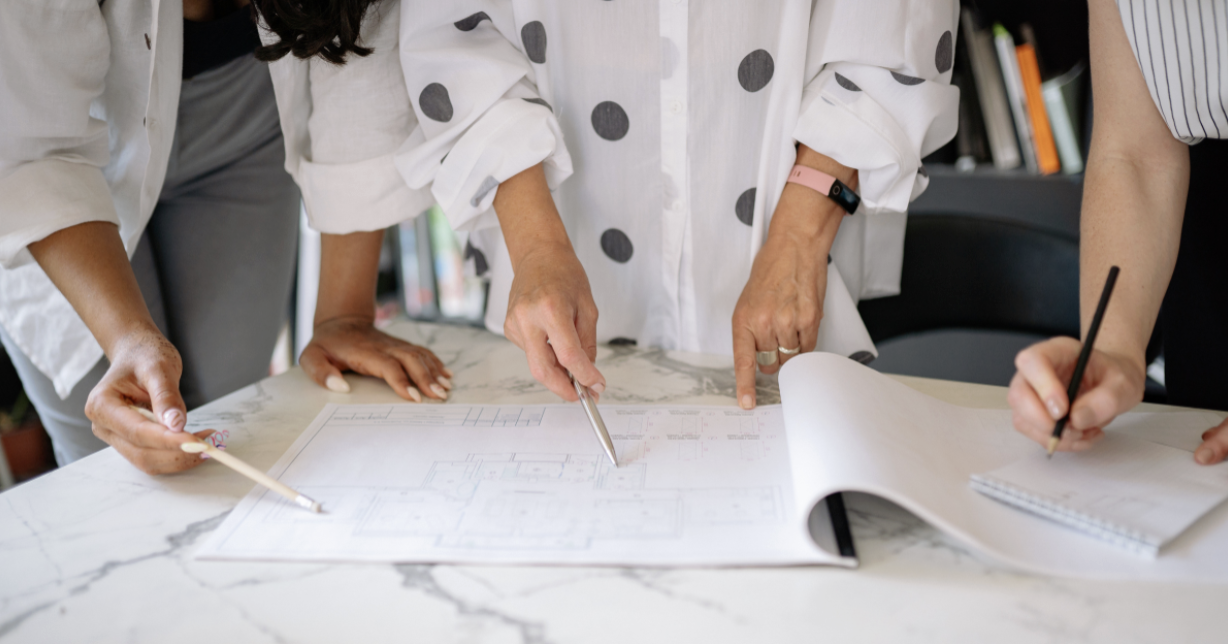
Early conversations are where we get everyone aligned on the details that will guide the project, creating clarity that carries through into construction.
Step 3: Embrace Pre-Construction
Once you've selected your dance partner, design work begins in earnest. That well-defined process we encouraged above starts to move through its steps. Often, you'll see conceptual, schematic, design development, and construction documents. But those are just the headlines; lean into the details of your partner's design process, steps, and stages. Don't rush pre-construction; done well, it's the epicenter of decisions, of intent. It makes the actual construction the easy part.
We do promote that pre-construction works best when design and estimating move together, not separately. (Yes, shameless plug for design/build or at least full team commitment early in design.) When design develops much past schematic design without cost feedback, owners may end up attached to design ideas that conflict with the budget. Cost and emotional letdowns increase owner stress, can cause unexpected new design costs to make edits, and unfailingly delay recognition of some cross-discipline factors that will eventually have to be addressed in the field. It can be boring things like civil design for grading and drainage, frustrating things like field conditions to resolve or repair hidden structure, or disappointing things like cabinet/counter/tile/fixture/paint not really feeling cohesive when you finally see them all installed. Design-build demands that all these disciplines, thoughts, conflicts, etc., meet at the table before construction.
We think the pre-construction process matters a lot and is actually the densest part of the overall project. A strong team does more than draw plans and pick materials. They test, price, revisit, and explore tradeoffs as the project evolves. A weak process hides uncertainty until it becomes expensive and disappointing.
Step 4: Conclude Pre-Construction/Initiate Construction Agreement
Two milestones signal the end of pre-construction. You're ready for a contract to build, and ready to submit for a building permit. Either your architect or builder can submit the application for a permit. In most cases, that's a behind-the-scenes activity that follows immediately after you've signed a construction agreement.
By now, you'll already know whether the builder is proposing a fixed-cost agreement or a cost-plus agreement, and what that means for your risk. You should also understand how changes are handled, what allowances are included, what warranty commitments are being made, and how schedule expectations are defined.
We recommend asking about the contract during the interview stage so you understand the basics of the eventual agreement. Now, you can focus on the specifics of the payment schedule, timeline, final scope of work, and specs. If a builder cannot explain the structure clearly, or if the terms feel like a surprise late in the process, get comfortable with all your questions before signing.
A construction agreement is not just paperwork. It is the framework for the relationship you are about to enter. If you understand it, the project starts with clear expectations. If you do not, disappointment and frustration may show up later when the stakes are higher.
The Payoff
Projects that start right tend to be uneventful during construction. There are no emergencies. Site visits are a stroll with a cup of coffee. Complexity lives when it must but doesn't turn into chaos. Asking and answering on paper, in pre-construction, and with trusted professional guidance makes for a smooth launch into groundbreaking and a surprisingly easy construction process.
An owner doesn't need to become a builder, zoning analyst, estimator, or permit expediter. When the owner has clear internal priorities and professional support that matches their priorities, moving through the process is satisfying work, not a life-altering horror story.
If you're considering a building project but unsure about next steps, consider a planning conversation with us as your kickoff. Successful projects start with your clarity. Get that right, and you've set the tone for moving from clarity to clarity throughout the project.