
How One Family Brought Their Dream Home Into Budget
Housing is expensive. Many of our clients need help bridging between their ideal and what makes sense to invest.
This is the story of one family who did exactly that—and what we changed (and didn’t change) to make it work.
The starting point: a beautiful, but too expensive design
This family’s home is 5,206 finished square feet. That size gives it some economy of scale, but it was also designed with a high level of detail and finish. Our first full estimate came in around $1.76M—reasonable for our area, but still more than was comfortable for the owners. They stepped back for several months to consider other options, then came back with a clear request:
Can we keep the basic house—the floor plan, the overall shape, the style—but bring the budget closer to $1.4M?
Instead of shrinking the house or redrawing it from scratch, they asked us to take the lead on value engineering: to go through the specifications line by line and find every place we could reduce cost while still delivering a home they would love.
What changed: where the money moved
We went back through the estimate and targeted a handful of specific areas. None of the edits altered the size or general character of the house, but together they added up to a meaningful shift in budget. The second budget came in about 16% lower, at roughly $1.48M—around $280,000 less than the first estimate.
Here’s how that happened, in broad strokes rather than one dramatic cut:
Masonry and retaining walls carried a lot of cost. By leaving some retaining walls as exposed cast concrete instead of adding a masonry veneer, we trimmed about $47,000.
Railings moved from custom fabrication to a well-designed system built from readily available components, saving another $9,000.
Interior trim was simplified: paint-grade instead of all stain-grade, stock profiles instead of fully custom, a couple of built-ins removed, and a modest reduction in exposed timber framing. Paired with easing COVID-era lumber prices, this cluster of decisions reduced cost by roughly $103,000.
On the exterior, stained wood siding gave way to fiber-cement products—still attractive and durable, and excellent for fire resistance, but less costly to install and maintain. That shift saved about $51,000.
Interior doors, hardware, garage doors, and a few windows were brought back to stock sizes and configurations. Keeping to standard components instead of custom ones took roughly $37,000 out of the budget.
Tile and carpet selections stayed aligned with the design intent, but we chose lines at a more modest price point, saving about $29,000.
Finally, we chose more economical light fixtures that fit the look of the home, trimming another $5,000.
Taken one by one, none of these changes tells the whole story. Taken together, they moved a beautiful, carefully designed home into a more comfortable financial range for the owners.
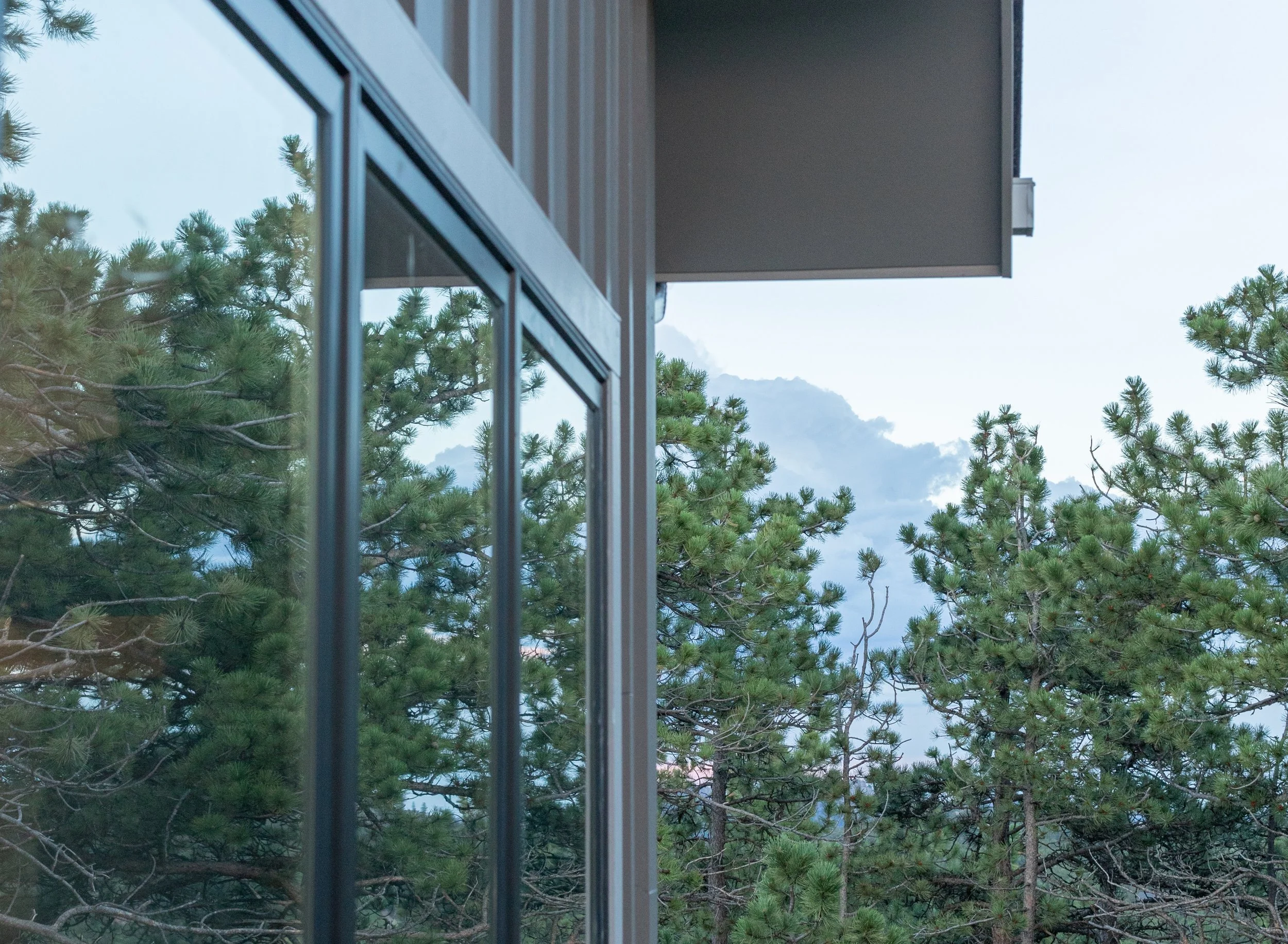
Stock window sizes and simplified configurations helped preserve quality while cutting costs—part of a series of design choices that saved $37,000.
What didn’t change: the baseline of quality
Equally important is what we did not touch.
There are elements of a home that are not really available to “value engineer.” On this project, we left the core systems intact:
Structural integrity: concrete and engineered structural systems stayed as designed and engineered.
Building performance: insulation systems remained intact; we delivered a well‑insulated, efficient envelope.
Windows: we maintained good‑quality window systems appropriate to the climate and the house, even as we simplified sizes.
Mechanical systems: heating, cooling, plumbing, and ventilation were maintained to deliver an energy‑efficient home.
In other words, the frame, the protective shell, and the core systems of the house remained strong. We focused our cost reductions on finishes and features—things that shape experience and aesthetics, but where there is often more than one good answer.
How decisions were made, and what that made possible
One of the big reasons this worked is that the owners asked us to take the lead on many of these decisions.
Instead of personally choosing every tile, every door profile, every railing detail, they gave us a clear brief:
Keep the floor plan and overall character of the house.
Bring the project into a realistic budget.
Stay aligned with their general taste and priorities.
With that trust, we could move efficiently. We selected from proven systems and materials we know perform well—things our vendors and partners keep in stock, support with parts, and can deliver easily.
On our side, knowing that we would be making more of the detailed decisions allowed us to shave our fee slightly. We could focus on executing a clear, coherent plan. The look and feel remained with the clients; the detailed means of delivering that look became our job.
That combination—owner clarity about budget, builder leadership on decisions, and a shared understanding of where we would and would not compromise—made this 16% cost reduction possible.
What this might mean for your project
If you’re looking at an early estimate that feels out of reach, this home is a good reminder that you may have more levers than you think.
You can:
Keep the core of your design and work with your builder to adjust specifications rather than shrinking the house.
Focus savings on finishes and features while protecting structure, performance, and long‑term durability.
Decide where you want to be highly involved in decisions, and where you’re comfortable asking your builder to choose within a clear budget and aesthetic.
Ask early: “If we shift more decisions to you, how could that help us manage cost and keep the project moving—and what still needs to be fully designed so we don’t create expensive gaps later?”
In future letters, we’ll keep exploring how decision‑making, design completeness, and other factors influence cost. As those factors become clearer, our hope is that you’ll feel more comfortable imagining a process that makes sense to you—and a finished home that reflects what you really wanted to create and invest.